Why the Operating Model Matters More Than the Machine
For years, ports and RoRo terminals have been under increasing pressure to reduce emissions, control operating costs, and improve predictability. Electrification is often presented as the inevitable next step. Yet in heavy-duty port equipment, the transition has been slow.
The reason is not a lack of technology.
It is risk.
In port operations, downtime is expensive, and new technology is frequently associated with uncertainty — technical, financial, and operational. From a customer’s perspective, electric equipment can feel like a promise of future benefits paired with present-day risk.
As manufacturers, we need to address that reality honestly. From Improving Machines to Rethinking Systems
At NTLiftec and Novatech, we operate in a very specific niche. Globally, only around 40–60 new RoRo translifters are delivered each year. In such a market, incremental product improvements alone do not fundamentally change how terminals operate.
When we began developing what later became the E-Master, the starting point was not electrification itself. The real question was simpler:
How can we make RoRo handling more predictable and less risky for the operator?
That question led us to rethink both the technical architecture and the commercial model.
Reducing Dependency and Complexity
Traditional RoRo translifters rely on specially built tuckmasters equipped with pumps and hydraulic lines and hoses. This configuration works, but it also creates dependency on specific suppliers, longer lead times on truckmasters, giving limited flexibility in fleet planning.
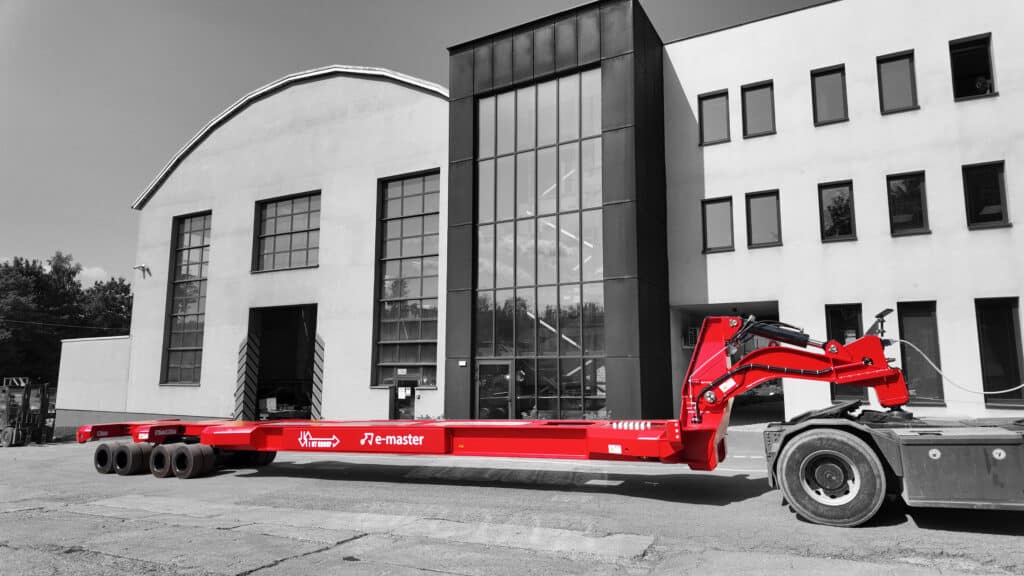
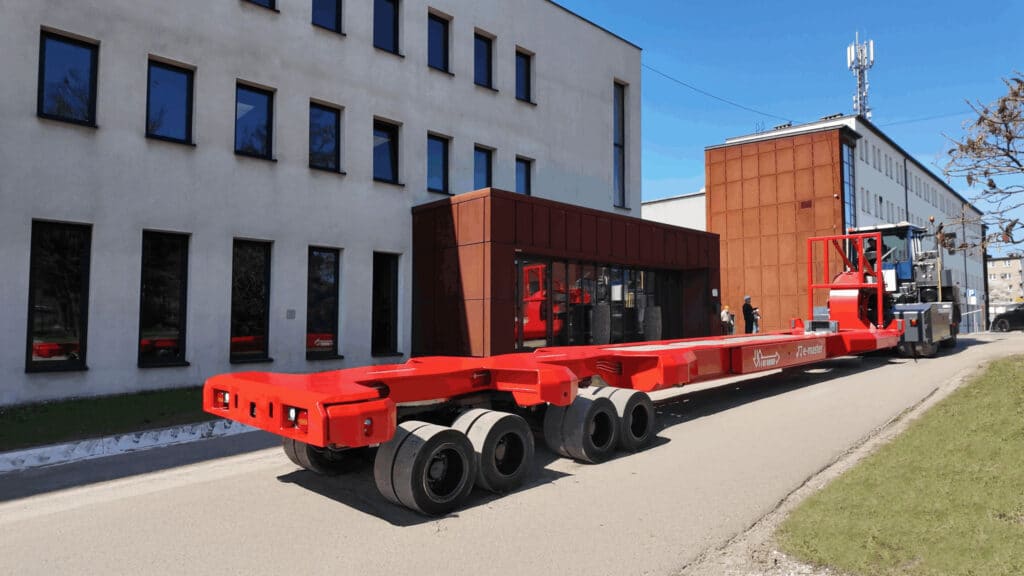
With the E-Master, all hydraulics and control systems are integrated onboard the translifter. The machine can operate with standard tuckmasters already available in terminals.
This design choice is not about novelty. It is about reducing system complexity and increasing operational freedom for the customer.
Looking at the Real Cost of Operation
Electrification is often evaluated through the lens of initial cost. In isolation, electric equipment typically represents a higher upfront investment than conventional diesel-based solutions.
However, port operations are not driven by purchase price alone. They are driven by daily operating cost, predictability, and uptime.
In a traditional RoRo handling setup, diesel consumption represents a significant and continuous cost factor. When this fuel consumption is replaced by electrical power — combined with a more efficient system architecture and reduced dependency on auxiliary equipment — the overall cost structure changes fundamentally.
Despite the higher initial cost of an electric solution, the E-Master is designed to deliver lower total operating cost over time. In practical two-shift operations, the combined effect of lower energy cost, simplified operation, and system-level efficiency makes daily savings at a level of approximately 35 EUR per day a realistic outcome.
The key point is not the exact number. It is that electrification, when executed correctly, can reduce total cost of ownership rather than increase it — even before emissions, noise reduction, and maintenance benefits are taken into account.
Beyond Price: A Shared Responsibility
Purchasers and financial decision-makers are often under pressure to focus on a single metric: price. Low cost and competitive pricing are important, and healthy competition is essential for any industry.
However, sustainable innovation requires continuous investment in research, development, and long-term support capabilities. When purchasing decisions are driven solely by the lowest initial price, the result is often a race to the bottom — one that ultimately weakens the supplier base and limits the industry’s ability to deliver reliable, future-ready solutions.
In the long run, this affects not only manufacturers, but also operators. If margins disappear entirely, investment in safety, reliability, service infrastructure, and next-generation technology disappears with them. At that point, even basic operational needs become difficult to support.
Buyers therefore also carry a responsibility: not just to reduce cost today, but to help sustain an ecosystem capable of delivering dependable solutions tomorrow.
With the E-Master, this reality has been taken into account. By combining a competitive operating cost with a model where we retain responsibility for performance, uptime, and continued development, customers gain predictability — without pushing risk or long-term viability out of the system.
Why We recommend Leasing Over Selling
Perhaps the most important decision was not technical, but commercial.
The E-Master represents a new technology platform. Expecting customers to carry the full risk of adopting that platform would be unreasonable. We therefore chose to offer it primarily as a leasing solution rather than through a traditional sales model.
Under this approach:
– No capital investment is required
– Customers pay only for uptime
– Downtime caused by technical issues is not charged
In practical terms, this means the risk remains with us — where it belongs.
ERIK KNUDSEN
Chairman & Founder
NT GROUP – NTLiftec / Novatech
CONTACT
Do you have any questions about our products or another subject? Then feel free to reach out to us using the contact form or email or call one of our engineers directly. We look forward to hearing from you.
Novatech ApS
Skudehavnsvej 30
9000 Aalborg
Denmark
VAT-no.: 19273008
Phone: +45 98165009
Fax: +45 98168097
E-mail: mail@novatech.dk
Our brands